Weak or manual product recommendations
Recommendations in the email should match the ones on the page
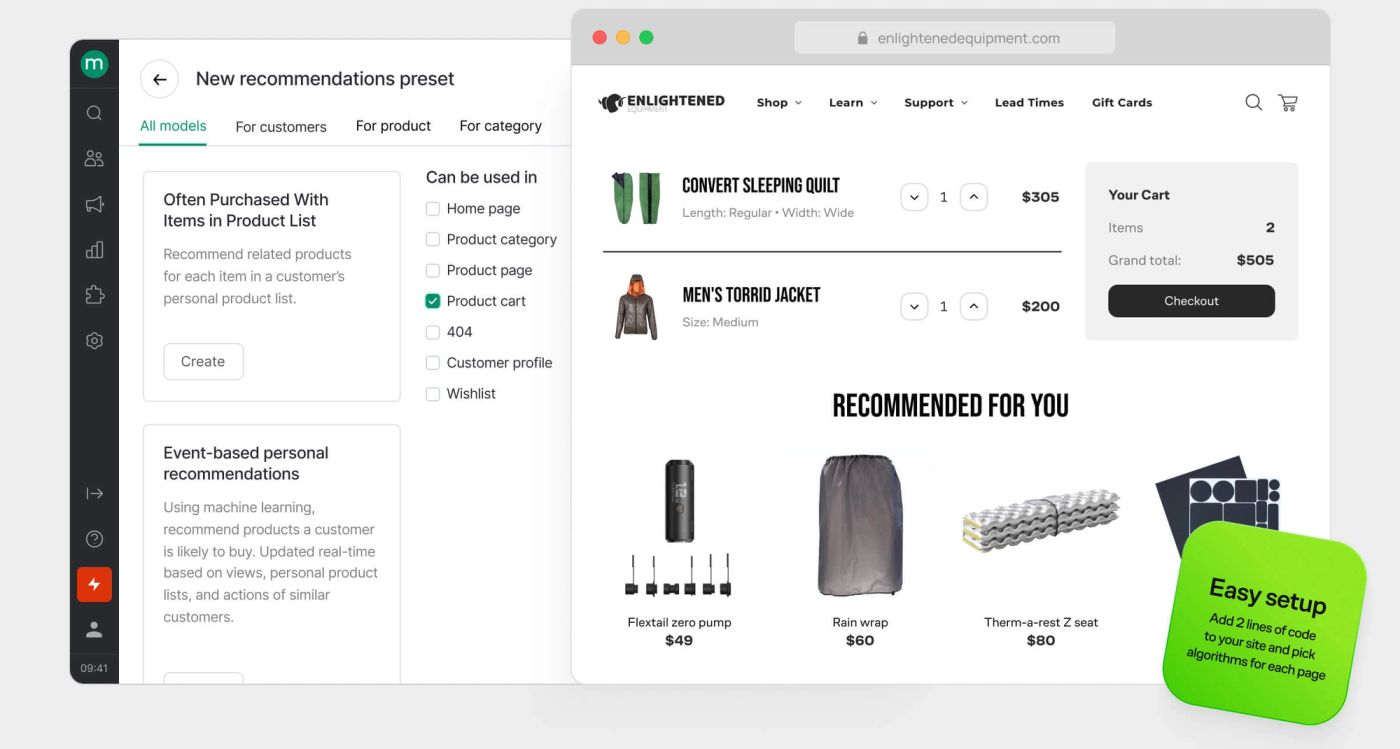
One engine serves both in Maestra Platform, the all-in-one retention marketing platform for ecommerce brands, built out by a forward-deployed marketer.
+15%
growth in website conversion rate
Brands running on Maestra






The problem
When recommendations actively work against your average order value
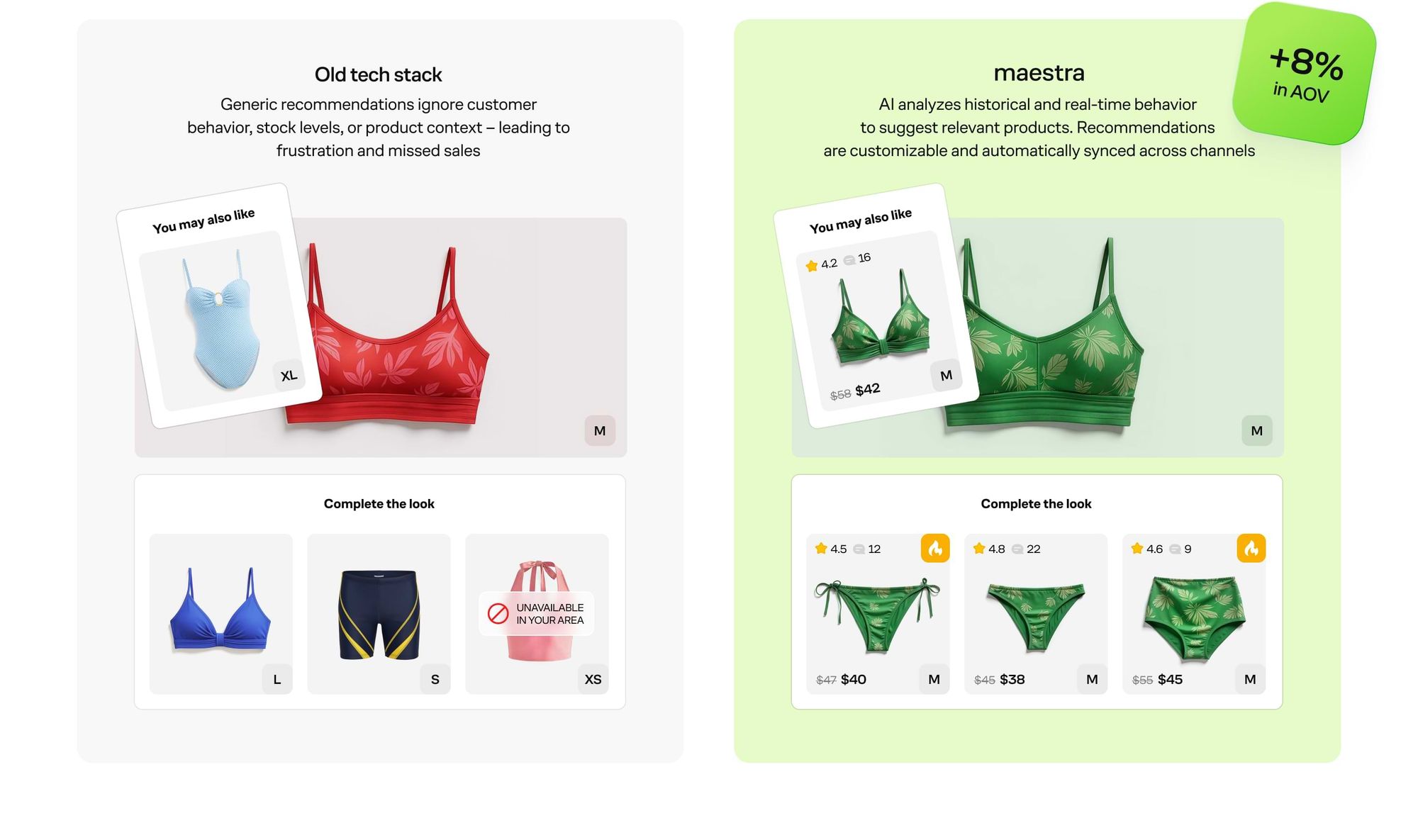
Some recommendation setups surface whatever is cheapest or easiest to match, quietly dragging down AOV instead of lifting it. Others require so much manual customization that teams end up doing the engine's job for it, defeating the point of automation.
What we hear from brands
an ecommerce brand with a companion mobile app sees product recommendations surfacing very low-priced items, dragging down AOV
an industrial-supplies company wants recommendations based on industry affinities and cart context, but existing solutions require heavy customization
a home goods and drinkware brand says current upsells require significant manual editing and don't effectively cross-sell between categories
The new way
AI on autopilot, with business rules whenever you want the wheel
Recommendations can run entirely on Maestra's AI engine, picking products from your inventory automatically. Or your team can fine-tune by color, price, category, or collection with no-code business rules, so merchandising expertise and machine learning work side by side instead of competing.
Outcomes brands report
Customer proof
An upsell bar that suggests the thing they forgot

Sleeping bags need liners and stuff sacks, and shoppers rarely remember both. A smart upsell bar raised the average order value by more than a third with no discount involved.
 Read the full case study
+38.7%
growth in average order value from the upsell bar
How it works
No IT project on your side
Nothing to install
Your developers are not part of this. Setup and day-to-day operation need no engineering support.
Your marketer does the building
Segments, flows, personalization rules, and A/B tests are their work, not a backlog item for someone on your team.
You review, they ship
Keeping up with approvals is the biggest job left on your side once the plan is agreed.
The platform
One engine behind every channel
Email, SMS, push, messengers, and the website are outputs of the same rules and the same data. Adding a channel is a setting rather than another vendor and another integration to maintain.
Your forward-deployed marketer
The first month, concretely
A roadmap you approve, the data migrated, deliverability configured, and the first flows live. None of that arrives as a recommendation for your team to implement.
Roadmap agreed in week one
Migration and deliverability handled for you
First flows live inside the first month
Replace your stack
What a fragmented stack costs beyond the invoices
Split data means every question takes an export, and every campaign is built from a partial view. The subscriptions are the visible cost, the missing single profile is the expensive one.
See it running before you talk to anyone
There is a tour of the platform on the site, and it does not ask for a calendar invite first.